Case Study
Builders vs Operators: Why Risk & Compliance Culture Dies in Leadership Transitions
Apr 11 · 5 min read
And what boards can do about it
-----
The Pattern No One Talks About
Four CEOs. Three CTOs. Six months.
Malaysia's digital banks are experiencing a leadership exodus barely eighteen months after launch. Raja Teh Maimunah at AEON Bank. Melvin Ooi at Ryt Bank. Rafiza Ghazali at KAF Digital. Glen Cha, AEON's CTO.
The headlines frame it as "natural evolution." The reality is more complex, and more consequential.
This isn't just a compliance story. It's a governance story. An operational risk story. A transformation story.
Because when founders leave before culture embeds, something breaks. Not dramatically. Quietly. In the space between what's documented and what's actually lived.
We call this the Integrity Deficit: the gap between an organisation's stated values and its operational reality.
And it's one of the most underestimated risks in any leadership transition.
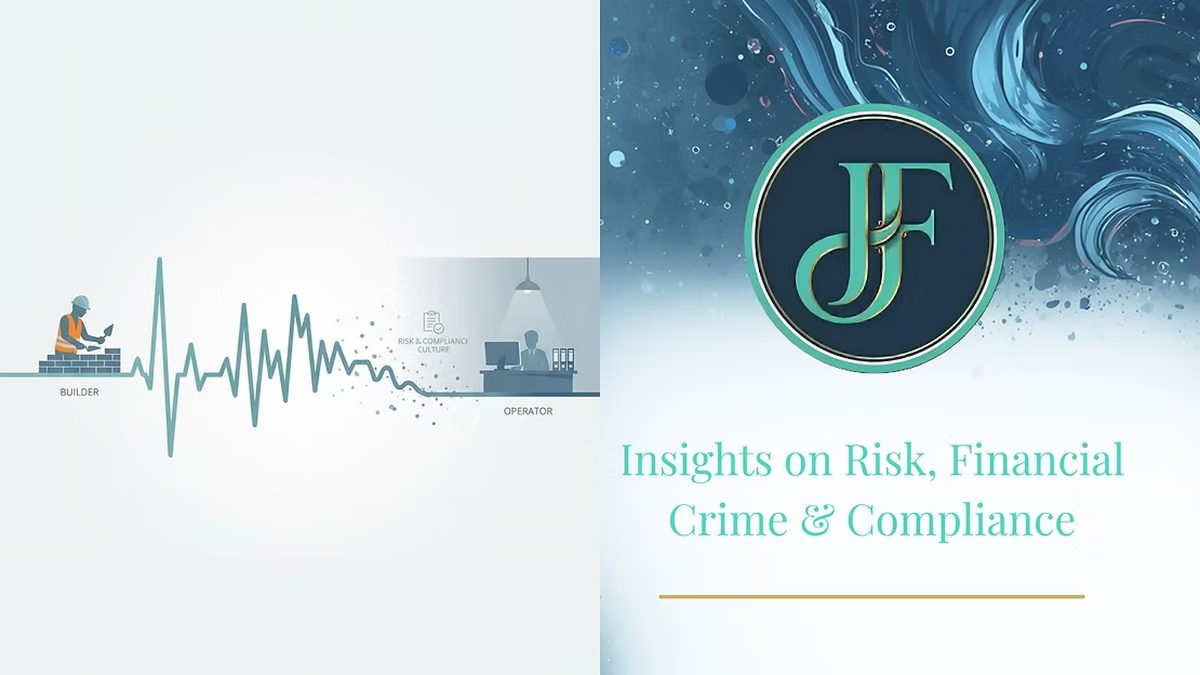
The Builders vs Operators Problem
Every organisation needs both. Few recognise they're rarely the same person.
Builders thrive on ambiguity. They see around corners. They get licenses approved, products launched, markets entered. They're essential for creation.
Operators need something different: discipline, process, the patience to embed controls that hold under pressure. They're essential for endurance.
The skills that launch an organisation aren't the skills that sustain it.
Hong Kong and Singapore's digital banks had 2-3 years to bed down culture before founders moved on. Malaysia's are younger, some barely eighteen months old. The handover is happening before the foundation has set.
Policies transfer. Culture doesn't.
The unwritten rules. The psychological safety that lets someone raise a red flag. The instinct that can't be documented in a procedure manual.
When founders leave before culture embeds, what survives?
What Actually Transfers, And What Doesn't
| Transfers Easily | Transfers Poorly | | ----------------------- | --------------------------------- | | Policies and procedures | Risk appetite in practice | | Organisational charts | Decision-making culture | | Compliance frameworks | Psychological safety | | KPIs and metrics | Ethical boundaries under pressure | | Technology systems | Institutional memory |
The first column lives in documents. The second lives in people.
This is why organisations can satisfy every regulatory requirement, produce every report, tick every box, and still fail. Because governance without culture is just documentation.
The Integrity Deficit in Practice
In 2019, Metropolitan Capital Bank & Trust received a consent order from the FDIC. Capital impairment. Unsafe conditions. They remediated. Documented everything. The consent order was terminated in July 2021.
Five years later, the bank failed, the first US bank failure of 2026. The reasons? Capital impairment and unsafe conditions. The exact same issues.
The documentation changed. The culture didn't.
This is what the Integrity Deficit looks like. And it's invisible to most board reporting until it's too late.
Beyond Compliance: The Broader Risk Landscape
Leadership transitions don't just threaten compliance culture. They create vulnerabilities across the entire risk and governance landscape:
Operational Risk
- Process knowledge walks out the door
- Informal controls disappear
- Incident response relies on relationships that no longer exist
Conduct Risk
- Tone from the top becomes uncertain
- Ethical boundaries get tested
- "How we do things here" becomes unclear
Governance Risk
- Board oversight gaps emerge during handover periods
- Strategic priorities shift without cultural continuity
- Accountability becomes diffuse
Third-Party Risk
- Vendor relationships lose their champions
- Oversight intensity drops during transitions
- Institutional knowledge of supplier risks disappears
The organisations that navigate transitions well don't treat these as separate problems. They recognise them as interconnected symptoms of the same underlying challenge: culture continuity.
What Boards Should Be Asking
Most board risk reporting focuses on lagging indicators: incidents, breaches, regulatory findings. By the time these surface, the culture has already eroded.
Here are the leading indicators that matter during leadership transitions:
Culture Health
- Are escalation rates changing? (Dropping rates often signal fear, not fewer issues)
- What's happening to voluntary turnover in risk and compliance functions?
- Are we seeing more "near misses" or fewer? (Fewer often means people stopped reporting)
Knowledge Transfer
- Have we mapped the informal knowledge that lives in departing leaders?
- Who holds the relationships with key regulators, and is that being transitioned?
- What decisions require context that isn't documented anywhere?
Governance Continuity
- Is our risk appetite being interpreted consistently across new leadership?
- Are we seeing divergence between stated values and observed behaviour?
- How are we measuring the Integrity Deficit, not just compliance status?
Building Cultures That Survive Transitions
The organisations that maintain culture through leadership changes share common characteristics:
1. They codify the unwritten rules Not in policy documents, but in stories, case studies, and decision frameworks that capture why things are done, not just what gets done.
2. They invest in the middle Culture lives in middle management. When senior leaders leave, it's the layer below that determines whether culture holds or drifts.
3. They measure culture, not just compliance Compliance metrics tell you what happened. Culture metrics tell you what's likely to happen next.
4. They build redundancy into relationships Key regulatory relationships, vendor oversight, and institutional knowledge shouldn't depend on any single person.
5. They treat transitions as transformation moments Not just handovers to manage, but opportunities to strengthen what works and address what doesn't.
The Transformation Opportunity
Leadership transitions are often framed as risks to manage. They're also opportunities to build.
The question isn't just "How do we preserve what we have?"
It's "How do we build cultures that are stronger than any individual leader?"
Cultures that hold under pressure. That protect customers when growth accelerates. That maintain integrity when no one is watching.
This is what transformation-focused advisory looks like.
Not just frameworks and policies. Not just compliance programmes and training. But the deeper work of building organisations where risk culture, governance, and conduct are embedded in how people think, not just what they document.
Where JFourth Fits
We work with boards, leadership teams, and risk functions navigating these challenges.
Our focus: Building risk and compliance into business design, not bolting it on as an afterthought.
Whether you're facing a leadership transition, scaling rapidly, or recognising that your culture hasn't kept pace with your growth, the question is the same:
What kind of organisation do you want to build?
We help you answer that. And then we help you build it.
💙
JFourth Solutions helps financial institutions build compliance cultures that survive leadership transitions. From PULSE® assessments to board advisory and team training, we focus on the human side of risk and compliance.
If your team is navigating a leadership transition, or building culture from scratch, *let's talk*.
*
Related Reading:
- Digital Banking in Malaysia: This is What Progress Actually Looks Like - Melvin Ooi, Fintech News Malaysia
- Malaysia's digital banks have the opportunity to own the middle - NST
Subscribe to Tripwire for weekly insights on building robust risk and compliance cultures through innovative, human-centred strategies.