
AI
The Pragmatic Hybrid
Sep 5 · 1 min read
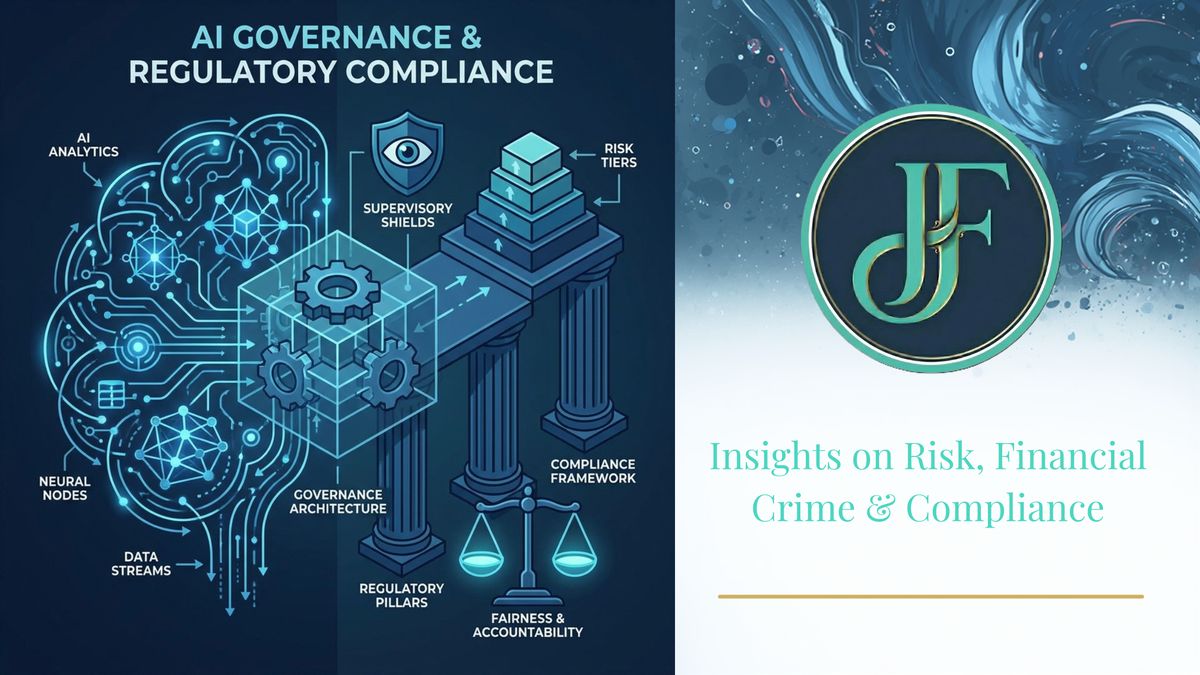
What Malaysia's AI Governance Bill Signals to the Region
On 27 July 2026, Malaysia's National AI Office (NAIO) under the Ministry of Digital published the public consultation paper for the nation's first comprehensive AI Governance Bill.
For enterprise boards, risk officers, and technology leaders monitoring the global fragmentation of technology regulation, this document is an essential case study.
Over the past three years, international AI regulation has polarized around two divergent philosophies:
- The European Pre-Market Model: Epitomised by the EU AI Act, this approach establishes a centralized, legally binding omnibus statute. It enforces heavy pre-market conformity assessments, mandatory CE marking, and severe statutory fines for high-risk deployments.
- The American Enforcement Patchwork: Built on voluntary technical guidance like the NIST AI Risk Management Framework (AI RMF 1.0), this model avoids federal omnibus legislation. Instead, it relies on market velocity paired with aggressive post-hoc enforcement by existing regulators such as the Federal Trade Commission and Securities and Exchange Commission against deceptive algorithmic practices.
Malaysia has chosen neither extreme. Instead, the NAIO consultation paper lays out a deliberate middle path: a Pragmatic Hybrid.
The Three Pillars of the Pragmatic Hybrid
Malaysia's proposed legislation brings together three distinct regulatory choices:
- EU-style clarity on risk tiering: The Bill introduces three statutory risk categories (Unacceptable Risk, High Risk, and Low Risk), giving enterprises explicit red lines regarding prohibited practices and fundamental rights protection.
- UK and Singapore distributed sectoral delivery: Rather than building a monolithic AI super-regulator, the framework empowers domain-specific Sectoral Leads (such as financial, healthcare, energy, and telecom authorities) to supervise AI within their specific industry verticals.
- Statutory teeth on incident reporting: Moving ASEAN decisively beyond voluntary ethical charters, the Bill establishes mandatory incident reporting, investigation, and root-cause remediation obligations.
For emerging digital economies, this architecture strikes a practical balance between attracting high-value artificial intelligence infrastructure and establishing national regulatory sovereignty.
However, anyone who has spent decades operationalising risk frameworks across Asia will recognise this design immediately. The entire structure borrows heavily from global anti-financial crime (AML/CFT) frameworks.
Borrowing proven compliance architecture is sensible. But borrowing the blueprint also means inheriting documented operational failure modes. If leadership teams want AI governance to create genuine resilience rather than procedural bureaucracy, there are three hard-won lessons from compliance that must be addressed at the code level.
1. Risk Tiers: Managing the Reality of Drift
The Bill categorizes AI systems based on foreseeable harm:
- Unacceptable Risk: Outlawed entirely (e.g. manipulative cognitive distortion or discriminatory social profiling).
- High Risk: Permitted only with mandatory risk assessments, documented data provenance, technical safeguards, and human oversight.
- Low Risk: Governed through baseline transparency notices and voluntary codes.
The initial taxonomy looks clean in a board presentation. The operational breakdown occurs when static classifications meet live production environments.
In financial services, risk is never static. A low-risk domestic payroll account can transform into an active money-mule funnel in three weeks if criminal syndicates gain access.
In artificial intelligence, this volatility is multiplied because modern models are probabilistic, adaptive, and context-dependent. A model classified as Low Risk at initial deployment can drift into High Risk territory through three routine technical events:
- Data and Feature Drift: Changes in real-world data distributions alter model weights and output variance over time.
- Context Expansion: An internal research summarisation tool is integrated directly into public customer-facing communication channels.
- Agentic Tool-Calling: A predictive model is granted autonomous execution privileges, such as database writes, API calls, or payment routing rails.
In banking, institutions that relied on static onboarding questionnaires repeatedly found themselves holding compliant paperwork while actual risk moved past them. The Hong Kong Monetary Authority's guidance on AI in AML/CFT highlighted this precise transition: risk management must evolve from periodic rule-based checks to dynamic, event-driven risk monitoring.
> The Question for Leadership: When an AI tool starts handling new data or taking on bigger decisions than it was originally approved for, what alerts you that it needs a fresh risk review?
2. Sectoral Leads: Bridging the Capability Divide
The Bill's decision to delegate supervisory execution to Sectoral Leads with domain expertise is the only scalable way to govern vertical industries. A central technology ministry cannot evaluate clinical medical software, algorithmic trading systems, and autonomous energy grids with equal precision.
This mirrors the supervisory architecture deployed across Asia-Pacific for financial crime, where central bodies set standards while individual sector supervisors enforce them.
However, historical implementation reveals a persistent vulnerability: the capability divide.
- Tier-1 Financial Regulators generally possess the examination staff, forensic resources, and institutional experience to audit complex technological controls.
- Peripheral Regulators and Professional Bodies are often handed statutory supervisory mandates without the engineering budget, specialized tooling, or technical personnel required to inspect advanced systems.
When statutory mandates outpace technical capacity, governance becomes a superficial checkbox review. Systemic vulnerabilities quietly concentrate in the least-resourced sectors.
To make the distributed model work in practice, central authorities must provide shared evaluation infrastructure. Singapore demonstrated this approach through the AI Verify Foundation, offering open-source testing toolkits so organizations and regulators can benchmark fairness, explainability, and robustness on standardized technical baselines.
> The Strategic Takeaway: Central governance bodies cannot simply delegate statutory authority. They must provide shared technical sandboxes, evaluation toolkits, and continuous audit capability funding to their sectoral partners.
3. Incident Reporting: You Can't Report What You Can't See
The NAIO Bill introduces mandatory incident reporting. When an AI system goes wrong, companies must document what happened, the harm caused, immediate containment steps, root causes, and how they plan to fix it.
Anyone in financial compliance will recognise this immediately: it is the exact same blueprint as filing a Suspicious Transaction Report (STR).
Because we lived through the rollout of transaction reporting across multiple markets, we already know the two classic pitfalls:
- Defensive Over-Reporting: Companies flood the regulator with minor software glitches just to protect themselves from penalties, burying genuine risks in noise.
- Silent Blind Spots: Serious failures go completely unreported because internal teams simply lack the live monitoring tools to notice that a model has malfunctioned.
A legal requirement to report is only as good as your ability to spot problems early. If you only inspect an AI tool during an annual audit or after a customer complains, you are finding out too late. Real oversight means having continuous monitoring built into the system so you catch unexpected behavior before real harm is done.
Mandatory reporting is only as effective as the runtime observability supporting it. If product and risk teams do not have continuous telemetry and safety circuit breakers built into their deployment pipelines, incidents will only be discovered after external harm has already occurred.
Recent supervisory papers, including the MAS SAFR (Safeguards for Agentic Finance at Runtime) framework, demonstrates that autonomous and agentic systems require real-time execution governance envelopes rather than retrospective audit logs.
The JFourth Perspective: Engineering the Governance Layer
Malaysia's AI Governance Bill provides a clear, progressive roadmap for ASEAN. It proves that mid-sized digital economies can establish rigorous technological guardrails without stifling foreign capital or domestic innovation.
For enterprise boards, founders, and CTOs, the takeaway is clear: governance cannot remain an isolated policy exercise handled by legal counsel once a year. It must be engineered directly into the software development lifecycle.
Three immediate priorities for technical and risk leadership:
- Maintain a Living AI Inventory: Catalog every model, third-party API dependency, fine-tuned weight set, and automated agent across the organization.
- Deploy Runtime Guardrails: Place programmatic circuit breakers between probabilistic model reasoning and real-world system execution.
- Bridge the Engineering-Compliance Vocabulary Gap: Ensure data scientists and risk officers share unified evaluation metrics, mutual accountability, and direct feedback loops.
Malaysia has laid out a balanced regulatory blueprint. Turning that blueprint into sustainable operational resilience is an engineering discipline.
JFourth Solutions advises boards, founders, and technology leaders across Asia-Pacific on risk architecture, regulatory readiness, and governance culture.