
Anti-Money Laundering
The Honeymoon Is Over: Closing the Gatekeeper Gap - The Complete Guide to AML for DNFBPs
Mar 28 · 6 min read
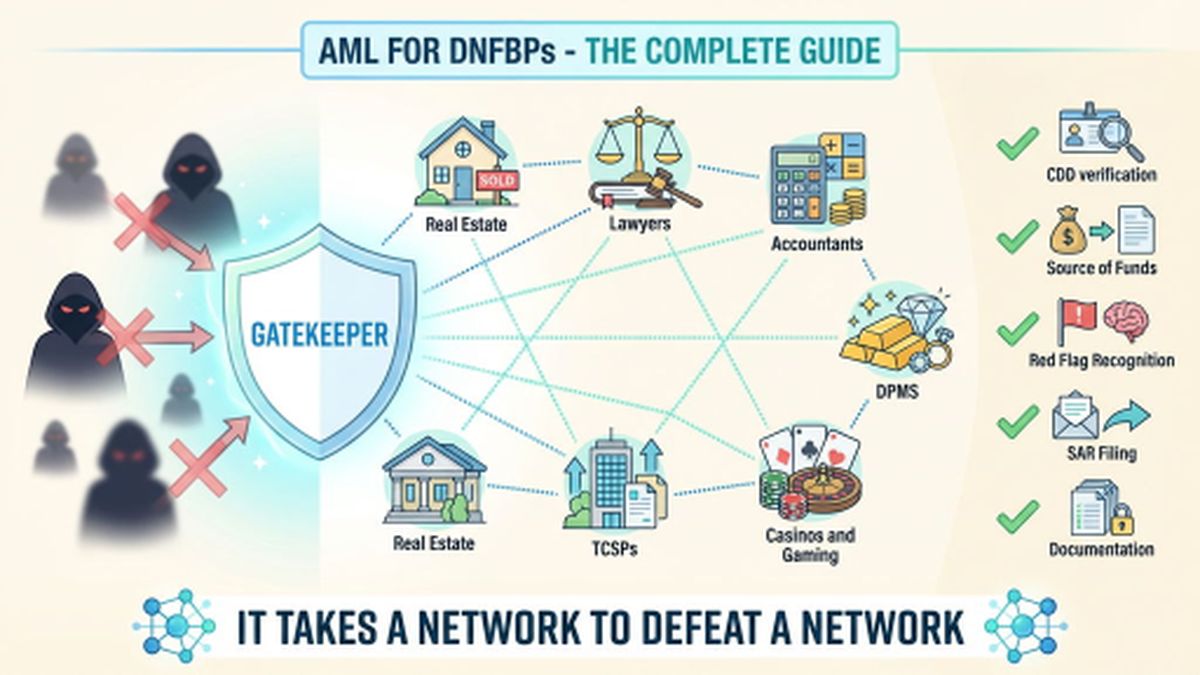
Criminals don't walk into banks anymore. They walk into law firms, real estate agencies, accounting practices, and casinos.
Why? Because banks got harder. Three decades of regulation, enforcement, and technology made traditional financial institutions hostile territory for dirty money.
So criminals adapted. They found the gatekeepers who control access to the financial system but face less scrutiny. The professionals who can move money, create structures, transfer assets, and provide legitimacy without the same regulatory pressure as banks.
FATF calls them Designated Non-Financial Businesses and Professions (DNFBPs). We call them gatekeepers.
And for years, many operated in a regulatory grey zone. Technically covered by AML obligations. Practically left alone.
That's changing.
The Enforcement Wave
The honeymoon period is over.
Casinos: Crown Resorts paid $450 million for 546 breaches of Australia's AML/CTF Act. The judge called their conduct "systemic, longstanding and egregious." Caesars Palace paid $7.8 million after allowing an illegal bookmaker to gamble for years despite knowing he had no legitimate source of funds.
Lawyers: The UK Solicitors Regulation Authority has escalated enforcement, with firms fined for inadequate client due diligence and failure to report suspicious activity. The direction is clear: professional privilege doesn't mean immunity.
Accountants: Hong Kong's AFRC just issued its first-ever disciplinary fines - HK$290,000 across three audit firms for AML failures. The regulator found "systemic failures" and "total lack of awareness" of AML guidelines. They've warned of escalating sanctions if issues persist.
Real Estate: Agents across jurisdictions face new reporting requirements. The UK's estate agency sector saw increased SRA scrutiny. Australia's Tranche 2 reforms are coming.
Trust & Company Service Providers: Corporate registries are tightening. Beneficial ownership requirements are expanding. The opacity that TCSPs once provided is being dismantled.
High-Value Dealers: Singapore's gold bar scams exposed vulnerabilities. Dealers face growing pressure to verify source of funds, not just complete transactions.
The pattern is global. The message is consistent: DNFBPs are gatekeepers, and gatekeepers will be held accountable.
The Gatekeepers
| Sector | Criminal Appeal | Key Vulnerability | Enforcement Trend | | ---------------------- | --------------------------------------------------- | ------------------------------------------ | ----------------------------------- | | Real Estate | Integration - converting cash to legitimate assets | High-value, cash-accepted, cross-border | Expanding reporting requirements | | Lawyers | Legitimacy - professional privilege, trust accounts | Client confidentiality vs. reporting duty | Increased regulatory scrutiny | | TCSPs | Opacity - shell companies, nominee structures | Complexity obscures beneficial ownership | Beneficial ownership registries | | Accountants | Credibility - audited accounts, tax structures | Trusted advisor status exploited | First enforcement actions emerging | | High-Value Dealers | Portability - compact, high-value, moveable assets | Cash transactions, minimal verification | Source of funds requirements | | Casinos | Conversion - cash to "winnings" in hours | VIP discretion, junket opacity | Major fines, licence reviews |
Each sector offers criminals something different. Together, they form an alternative financial system, one that's been operating with less oversight than the banks criminals abandoned.
Common Threads
Across all seven sectors, the same patterns emerge.
1. Culture Eats Compliance for Breakfast
Crown Resorts had compliance teams. Caesars had surveillance systems. The Hong Kong audit firms had access to AML guidelines.
None of it mattered because the culture prioritised revenue over risk.
When a VIP host is pressured to accommodate a high-roller who can't verify source of funds, that's culture. When a lawyer is discouraged from asking uncomfortable questions about a lucrative client, that's culture. When an accountant signs off on structures they don't fully understand because the fees are good, that's culture.
Rules don't stop financial crime. People do. But only if the culture empowers them to act.
2. Red Flags Ignored
The Caesars case is instructive. Multiple due diligence checks failed to identify a legitimate income source. An anonymous caller identified the customer as a "bookie." His account was suspended, reviewed, and repeatedly reinstated.
Why? Because he was valuable.
This pattern repeats across sectors:
- The property buyer paying cash with no clear source of wealth
- The client seeking complex offshore structures for no apparent business purpose
- The customer indifferent to fees, focused only on speed and discretion
Red flags aren't suggestions. They're obligations. When multiple indicators point to the same conclusion, the conclusion is probably correct.
3. The Capacity Gap
Large casino operators have resources. Major law firms have compliance departments. Big Four accounting firms have global AML frameworks.
But most DNFBPs aren't large operators. They're solo practitioners, family businesses, small firms. They lack the systems, training, and expertise that major institutions take for granted.
The expectations are the same. The capacity isn't.
This doesn't excuse non-compliance. But it explains why sector-wide uplift requires more than enforcement - it requires education, tools, and support.
4. The Human Cost Gets Forgotten
Behind every laundered dollar is a source crime. Drug trafficking. Human exploitation. Fraud. Corruption.
The real estate agent who facilitates a suspicious purchase enables the criminal to enjoy their proceeds. The lawyer who creates an opaque structure helps them hide it. The accountant who doesn't ask questions helps them legitimise it. The casino that converts their cash helps them spend it.
Gatekeepers aren't neutral. Every transaction either enables harm or prevents it.
The PULSE Framework
Across all seven sectors, the same principles apply.
P - Purpose
Understand your role as a gatekeeper. You're not just providing a service. You're controlling access to systems that criminals exploit. Your professional obligations include preventing that exploitation.
U - Unified Standards
Apply the same rigour to every client, regardless of value. The high-fee client deserves scrutiny, not exemption. When standards vary based on revenue, criminals find the gaps.
L - Leadership
Culture flows from the top. When leadership treats compliance as a cost centre, staff get the message. When leadership celebrates employees who flag concerns, even about valuable clients. That's the culture that prevents crime.
S - Screening
Use the tools available. Sanctions lists. PEP databases. Adverse media searches. Source of funds verification. The technology exists. The data exists. Use them.
E - Evidence
Document your reasoning. If you investigated a client and concluded they were legitimate, record why. If you identified red flags and took action, document the process. When regulators review your files — and they will — they're looking for evidence of thought, not just completed checklists.
What DNFBPs Should Do Now
Immediate Actions
1. Assess your current state
Do you have written AML policies? Are they implemented or just filed? When did staff last receive training? Would your files survive regulatory scrutiny?
2. Identify your high-risk areas
Which clients, services, or transactions present elevated risk? Are you applying enhanced due diligence where required?
3. Review recent matters
Look back at your last 20 clients or transactions. Were there red flags you missed? Patterns you didn't see? Questions you didn't ask?
4. Train your people
Not checkbox training. Practical scenarios. What does a suspicious client actually look like in your sector? How do staff escalate concerns? Do they feel safe doing so?
5. Document your framework
If you can't show regulators what you do and why, you can't prove you do it.
Ongoing Commitments
- Stay current: Regulations evolve. Typologies change. What worked last year may not work next year.
- Share intelligence: Talk to peers. Join industry groups. Learn from others' experiences.
- Build culture: Make compliance part of how you operate, not something bolted on.
The Network Effect
It takes a network to defeat a network.
Criminals have networks. The lawyer who creates the structure knows the TCSP who provides the nominee. The accountant who prepares the financials knows the banker who doesn't ask questions. The junket operator who recruits the gambler knows the casino that looks the other way.
The defence needs networks too.
Regulators sharing intelligence across borders. Industry associations setting standards. Professionals learning from each other's failures. Compliance officers building cultures that resist exploitation.
That's how we close the gatekeeper gap.
The Bottom Line
For years, DNFBPs operated with less scrutiny than banks. That era is ending.
The enforcement actions are accelerating. Crown. Caesars. UK solicitors. Hong Kong auditors. The fines are growing. The accountability is becoming personal.
But enforcement alone won't close the gap. What's needed is a shift in how gatekeepers see themselves.
You're not just a service provider. You're a control point. Every client you accept, every transaction you facilitate, every structure you create, you're either enabling harm or preventing it.
The criminals have adapted. They've found the gaps in the system and they're exploiting them.
The question is whether gatekeepers will adapt too.
This concludes The Gatekeeper Gap series.
The Series
- Part 1: The Gatekeeper Gap - Why Criminals Bypass Banks
- Part 2: AML for Real Estate Professionals
- Part 3: AML for Lawyers
- Part 4: AML for Trust & Company Service Providers
- Part 5: AML for Accountants
- Part 6: AML for High-Value Dealers
- Part 7: AML for Casinos & Gaming